Wine Cellar Flooring
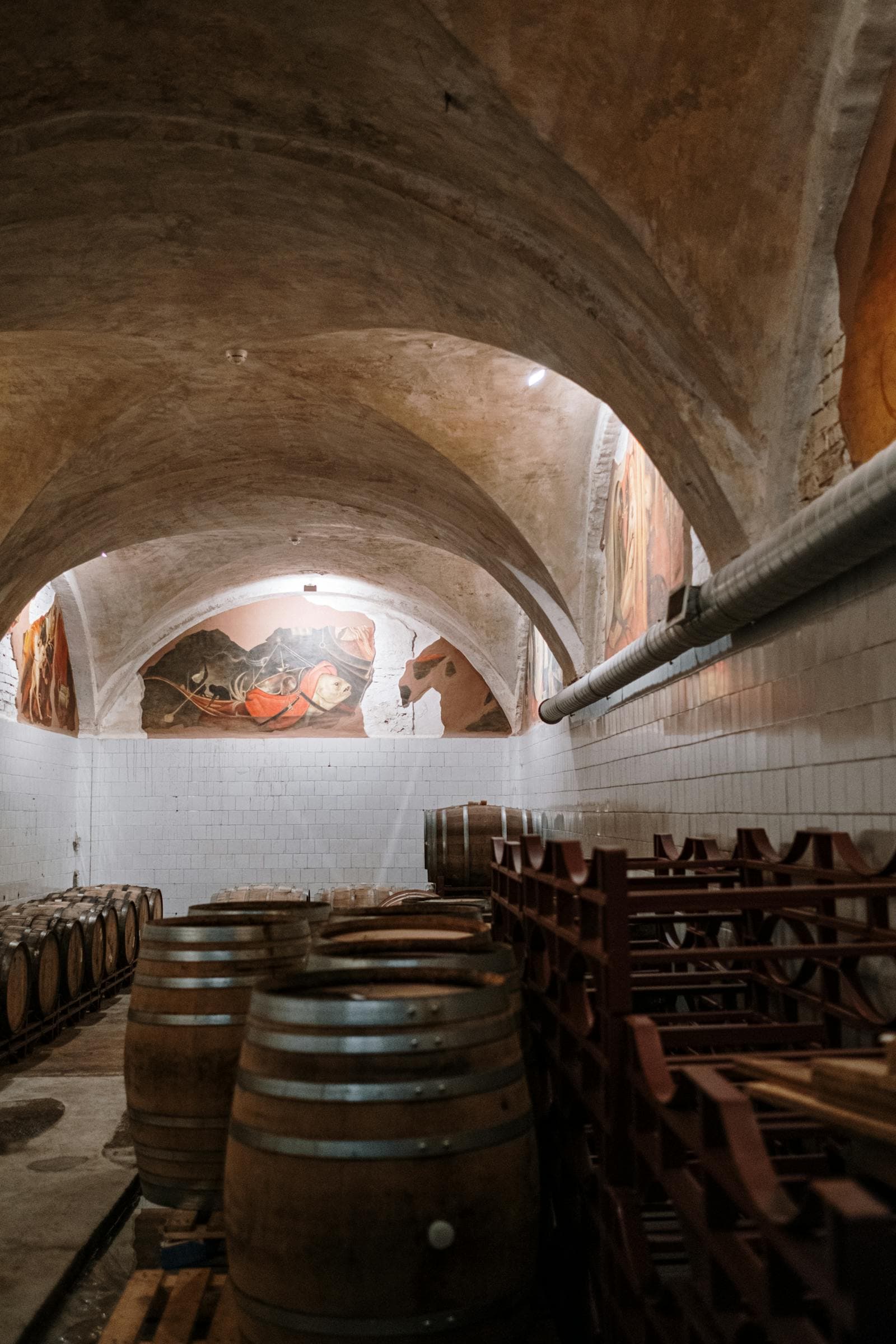
Wine cellar flooring has to perform in conditions that destroy most residential floor materials. Sustained 60-70% humidity buckles ordinary hardwood, lifts laminate, and can grow mold under carpet. Cool floor temperatures cause condensation on stone if installed without proper substrate detail. Our wine cellar flooring options are limited to materials proven to perform in cellar climate — natural slate and marble, sealed porcelain, reclaimed wine-barrel oak that has already been exposed to humidity for decades, and engineered hardwood with the right moisture barrier. We will help you pick the look you want from the materials that actually survive long-term in a cellar.
Why most flooring fails in wine cellars
The materials that make beautiful living-room floors fail spectacularly in cellars. Solid oak hardwood will cup and buckle within a year at 65% humidity. Laminate will swell at the seams and lift. Engineered hardwood without a vapor barrier will eventually delaminate. Carpet will hold moisture against the substrate and grow mold. Even tile fails when installed without proper isolation membrane on a cool slab — condensation collects under the tile and the grout fails. Stone (slate, marble, travertine) can succeed beautifully but only if the substrate is properly insulated and sealed against condensation. We have torn out failed wine cellar floors more times than we can count, and the failures always trace back to the wrong material or the wrong installation method for cellar conditions.
How we choose and install wine cellar flooring
Material selection happens during the design phase, before construction. We talk through aesthetic preferences (warm wood, cool stone, contemporary porcelain) and match them against what will actually survive in your specific cellar climate. Below-grade cellars in damp regions push us toward sealed porcelain or stone with isolation membrane. Above-grade cellars in dry climates open up reclaimed wood-barrel oak, properly engineered hardwood with floating installation, and stone or porcelain. Substrate prep is critical regardless of material: under-slab insulation (R-10 minimum) in any below-grade install, cement board or self-leveling underlayment for stone, isolation membrane (Schluter Ditra or equivalent) for any tile installation. Wood floors get a continuous vapor barrier underneath and a perimeter expansion gap. Installation is by our finish carpentry crew, not subcontracted to a flooring installer who has never seen a wine cellar.
What's Included
- Reclaimed wine-barrel oak
- Natural slate, marble and travertine
- Sealed porcelain options
- Heated-floor compatible installs
Technical Specifications
Flooring mistakes that show up within a year
- ✕Solid oak hardwood in a cellar at 65% humidity — guaranteed cupping and buckling
- ✕Tile installed directly on slab with no isolation membrane — condensation lifts the grout
- ✕No under-slab insulation in below-grade cellars — slab is constantly cool, condensation forms above
- ✕Carpet of any kind — holds moisture, grows mold, never survives long-term
- ✕Wood floors without expansion gaps at the perimeter — buckling under cellar humidity cycles
Continue Your Cellar Project
Custom Wine Cellars
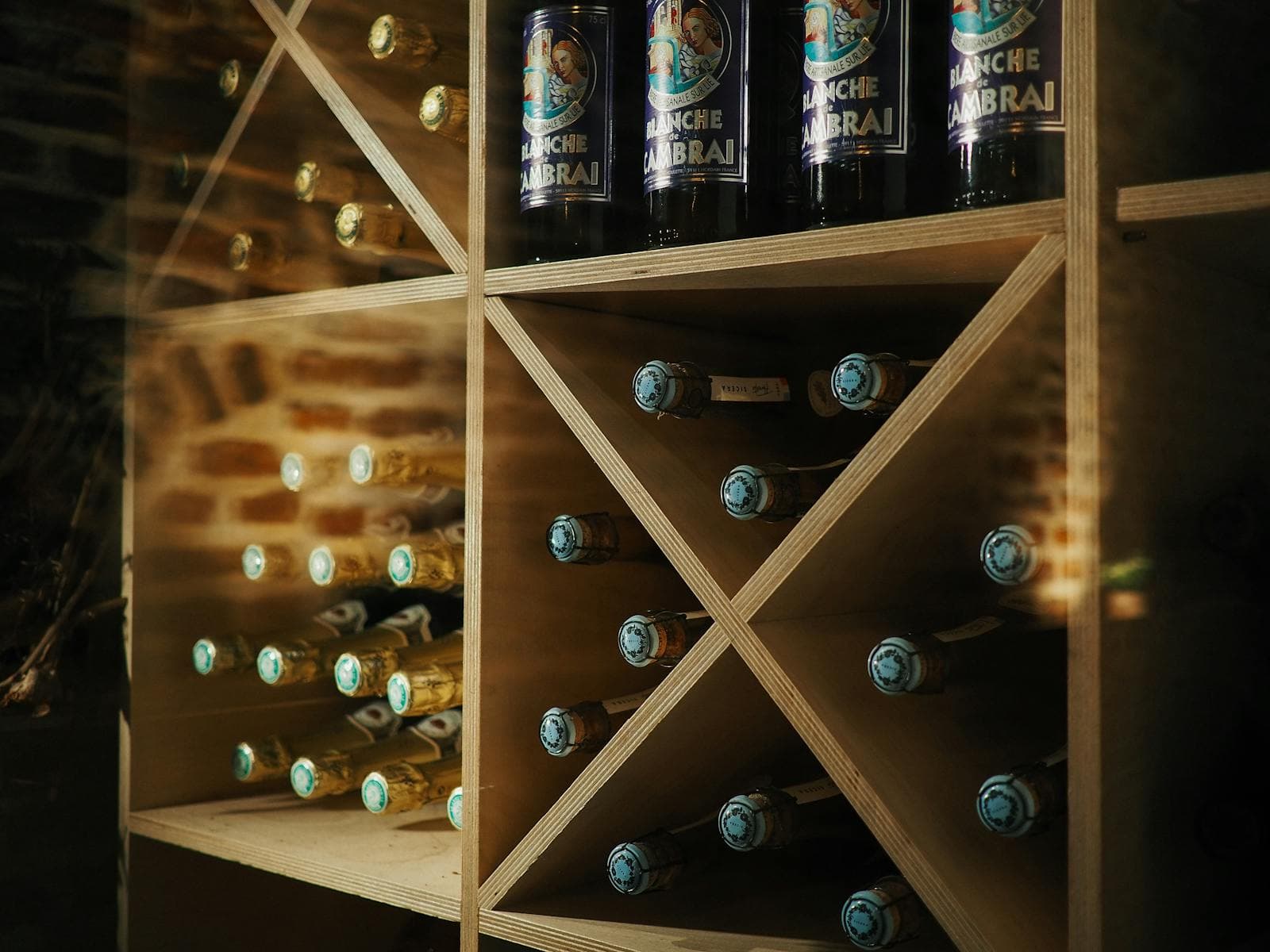
One-of-a-kind cellars built around your home, your collection and your taste.
Custom Wine Cellar Design
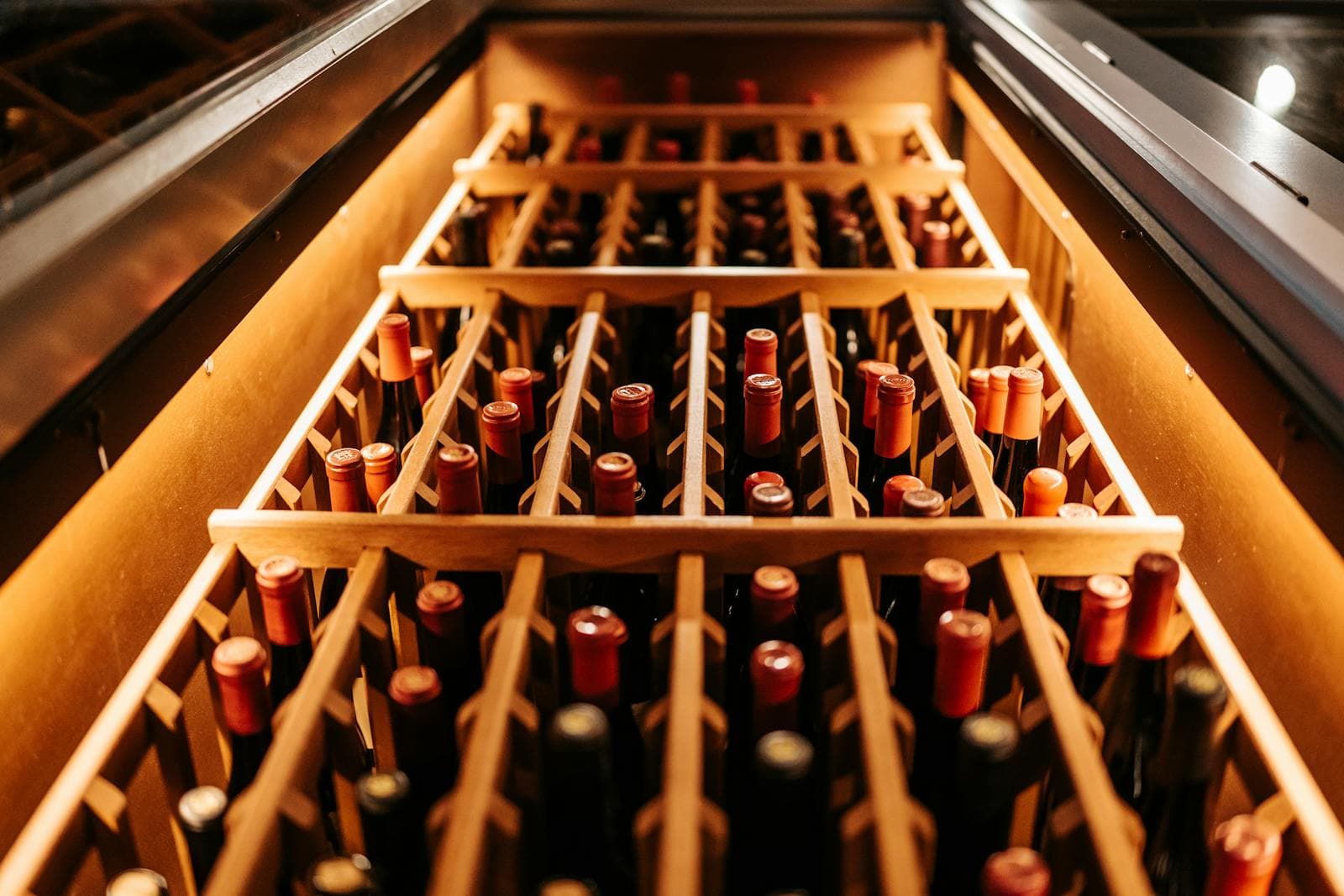
Bespoke 3D-rendered designs that match your home's aesthetic and storage goals.
Wine Cellar Construction
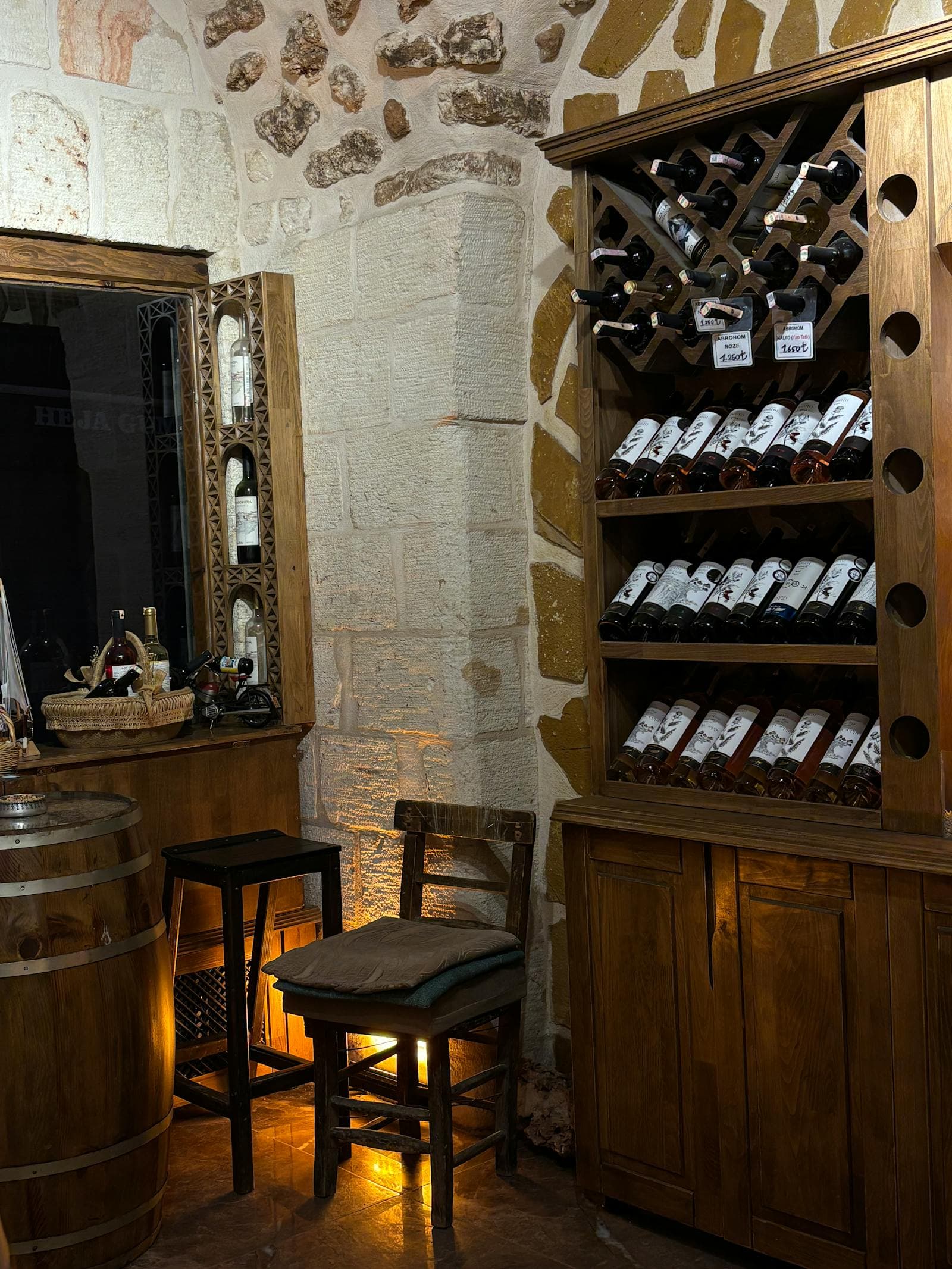
Heavy construction — basements, additions, vaults and dedicated cellar rooms.
Wine Cellar Lighting
Low-heat, dimmable LED systems designed for display and preservation.
Wine Cellar Flooring Questions
Can I use real hardwood flooring in a wine cellar?+
With caveats, yes. Reclaimed wine-barrel oak is the safest hardwood choice — it has already lived in cellar humidity for years and is dimensionally stable. Engineered hardwood (a stable plywood core with a hardwood veneer) installed floating over a vapor barrier is the next-best option. Solid hardwood directly nailed to a subfloor at 65% humidity will fail — it will cup, buckle, or split within twelve months regardless of species or finish quality.
Is stone a better wine cellar floor than wood?+
Stone is more forgiving in extreme conditions and lasts longer with no maintenance, but it is also colder underfoot and harder on dropped bottles. Slate, marble, travertine and porcelain all perform reliably in cellar climates when installed correctly. Wood floors feel warmer and more residential, but require more substrate detail and material selection care. We help clients decide based on cellar style — traditional vaults usually want stone or brick, contemporary glass-walled cellars usually want polished porcelain, and warm residential cellars usually want reclaimed barrel oak.
Do wine cellars need heated floors?+
Heated floors are increasingly common in higher-end builds. They make the cellar feel more comfortable to walk through, prevent the floor from being a cold sink that condenses moisture, and help balance overall room temperature. We install low-temperature radiant heat compatible with all of our flooring options. The system runs at very low set-points (65-70°F floor temperature) so it does not fight the cooling unit. Heated floors add roughly $4,000-$10,000 to a typical cellar build.
What does wine cellar flooring typically cost?+
Pricing varies with the size of the room, the materials you pick and the condition of the existing space. A straightforward project usually lands between $8,000 and $35,000; larger custom builds run higher. We give you an itemized quote — labor, materials, cooling, electrical, permits — before we ask for a deposit, so you can compare apples to apples.
How long does wine cellar flooring take from start to finish?+
Two to four weeks of work on-site is normal for a residential project, plus design and permitting up front. Larger custom builds run six to ten weeks. We hand you a real schedule on day one — and we update it every Friday.
Are you licensed, insured, and warrantied?+
Yes — fully licensed and insured in all 50 states, with HVAC-certified technicians on every cooling install and a 10-year structural warranty on every wine cellar we hand over. Our cooling units carry the manufacturer warranty plus our own service-plan coverage.
Will I work with the same team from start to finish?+
Yes. One project manager and one in-house crew handles the entire job. We never subcontract framing, cooling, racking or finish work to a third party — that's the whole reason the company exists.