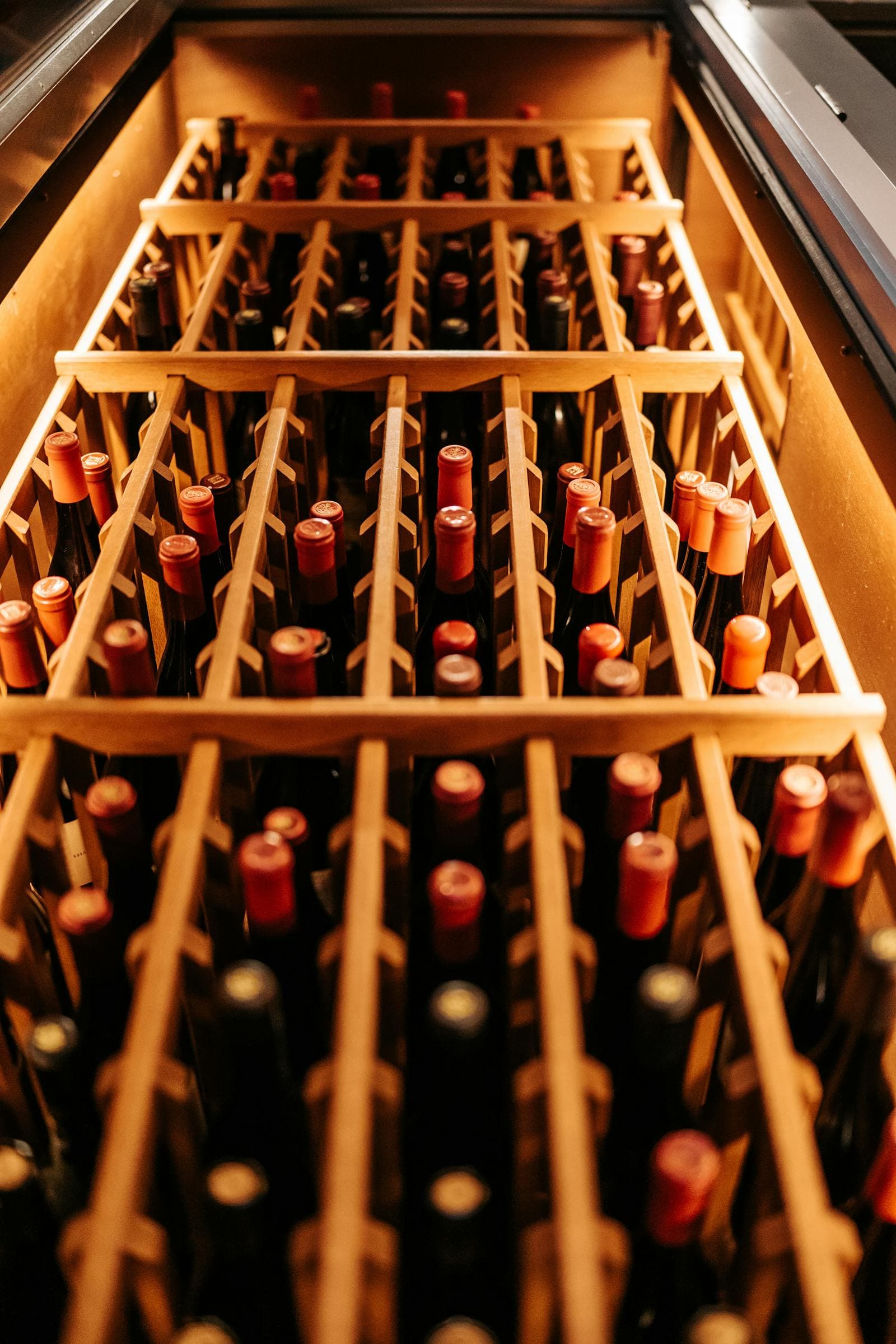
Wine Cellar Lighting
Wine cellar lighting has to do two contradictory things at once: light the room beautifully so the cellar functions as a display piece, while emitting almost no heat and almost no UV, because both of those degrade wine. Standard incandescent and halogen lighting fails on both counts — they produce significant heat (driving up cooling load) and meaningful UV (fading labels and damaging wine). Our wine cellar lighting designs use only low-heat, low-UV LED fixtures, integrated with dimmer scene control and (where the budget allows) smart-home automation through Lutron, Control4, or Crestron. The result is a cellar that looks museum-quality on entry and idles at near-zero light load when no one is in the room.
Why wine cellar lighting needs a specialist
Lighting in a wine cellar is the most visible component, and the one that homeowners react to first when the cellar is finished. It is also the component most likely to be specified incorrectly by a general contractor or interior designer who is not thinking about heat load and UV exposure. Halogen MR16s in a wine cellar generate enormous heat — a single 50W fixture can dump 170 BTU/hr into the room, multiplied across ten or fifteen fixtures. That heat has to be removed by the cooling unit, which now runs harder and dries the air more aggressively. Standard fluorescent emits UV that fades labels and accelerates wine reactions. Cheap LED strips have terrible color rendering (CRI under 80) that makes wine bottles look gray and washed out. We specify LED fixtures with CRI above 90, color temperature at 2700-3000K (warm enough to flatter wood and labels), and full dimmer compatibility for scene control.
How we design wine cellar lighting
Lighting design happens during the 3D rendering phase, not as an afterthought. We map the cellar in three lighting layers: ambient (overall room illumination), accent (display and feature lighting), and task (focused light at the cooling unit, sensor, and any tasting surface). LED strips integrated into racking provide the ambient layer with virtually zero shadow on the bottles. Recessed downlights or pendants provide the accent layer for glassware, decanters, or feature walls. Dimmer integration (Lutron Caseta, RadioRA3, or Control4) lets the cellar shift from full display brightness for entertaining to soft minimum for daily access. Every fixture is sealed against the vapor barrier — recessed cans cut into the ceiling are the most common point of envelope failure, and we either avoid them entirely or seal each one with airtight covers and gaskets. All wiring runs on a separate low-voltage circuit from the cooling unit so dimming does not interfere with the cooling controls.
What's Included
- Low-UV, low-heat LED fixtures
- Dimmable scene control
- Display, accent and rack lighting
- Smart-home and Lutron integration
Technical Specifications
Lighting mistakes that ruin cellars
- ✕Halogen MR16 fixtures dumping 170 BTU/hr each into the cellar — cooling never catches up
- ✕Recessed cans cut through the vapor barrier without sealing — entire envelope fails
- ✕Cheap LED strips with CRI under 80 — bottles look gray, wood looks lifeless
- ✕No dimmer integration — cellar runs at full display brightness 24/7
- ✕Lighting on the same circuit as the cooling unit — voltage flicker on dimming
Continue Your Cellar Project
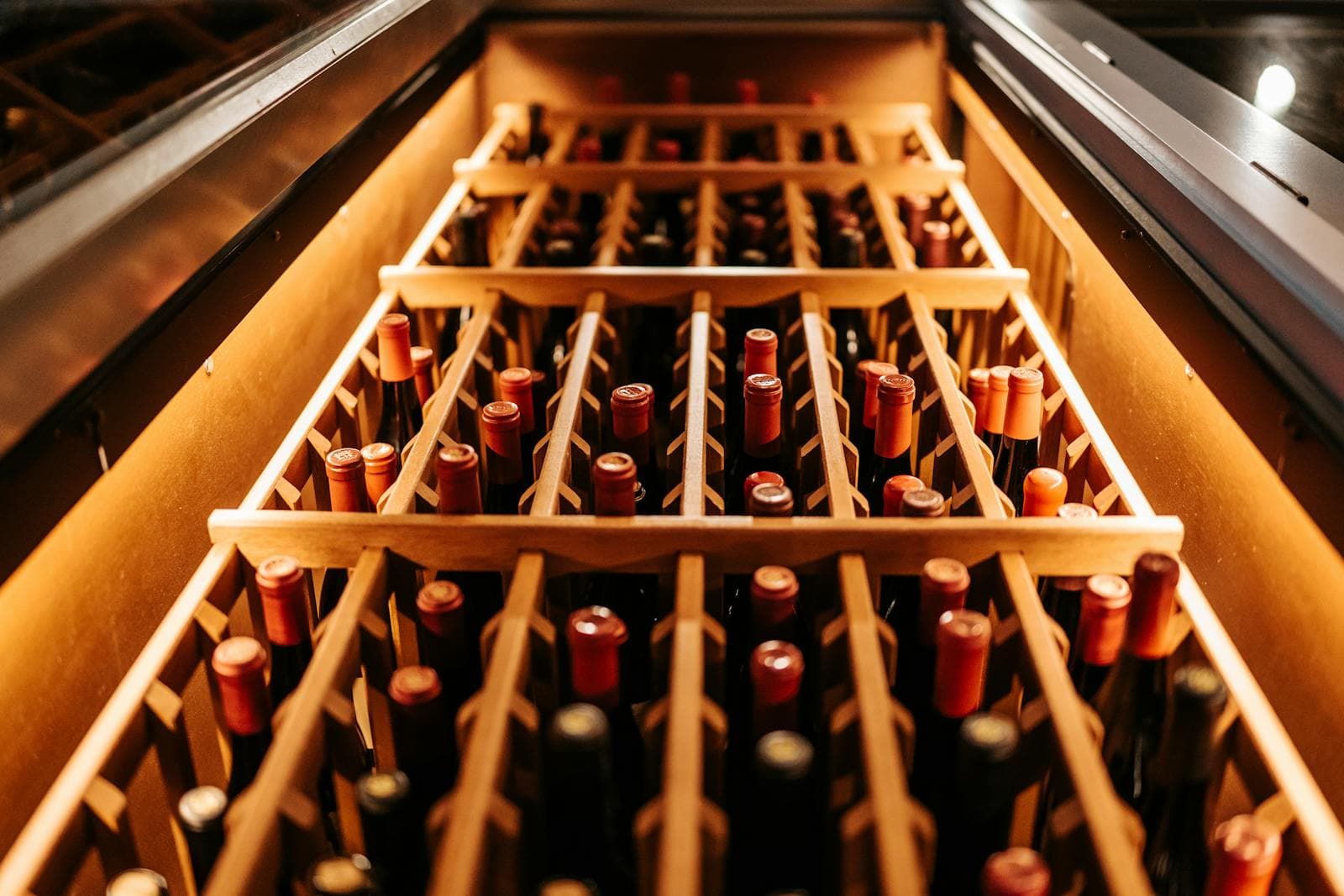
Custom Wine Cellar Design
Bespoke 3D-rendered designs that match your home's aesthetic and storage goals.
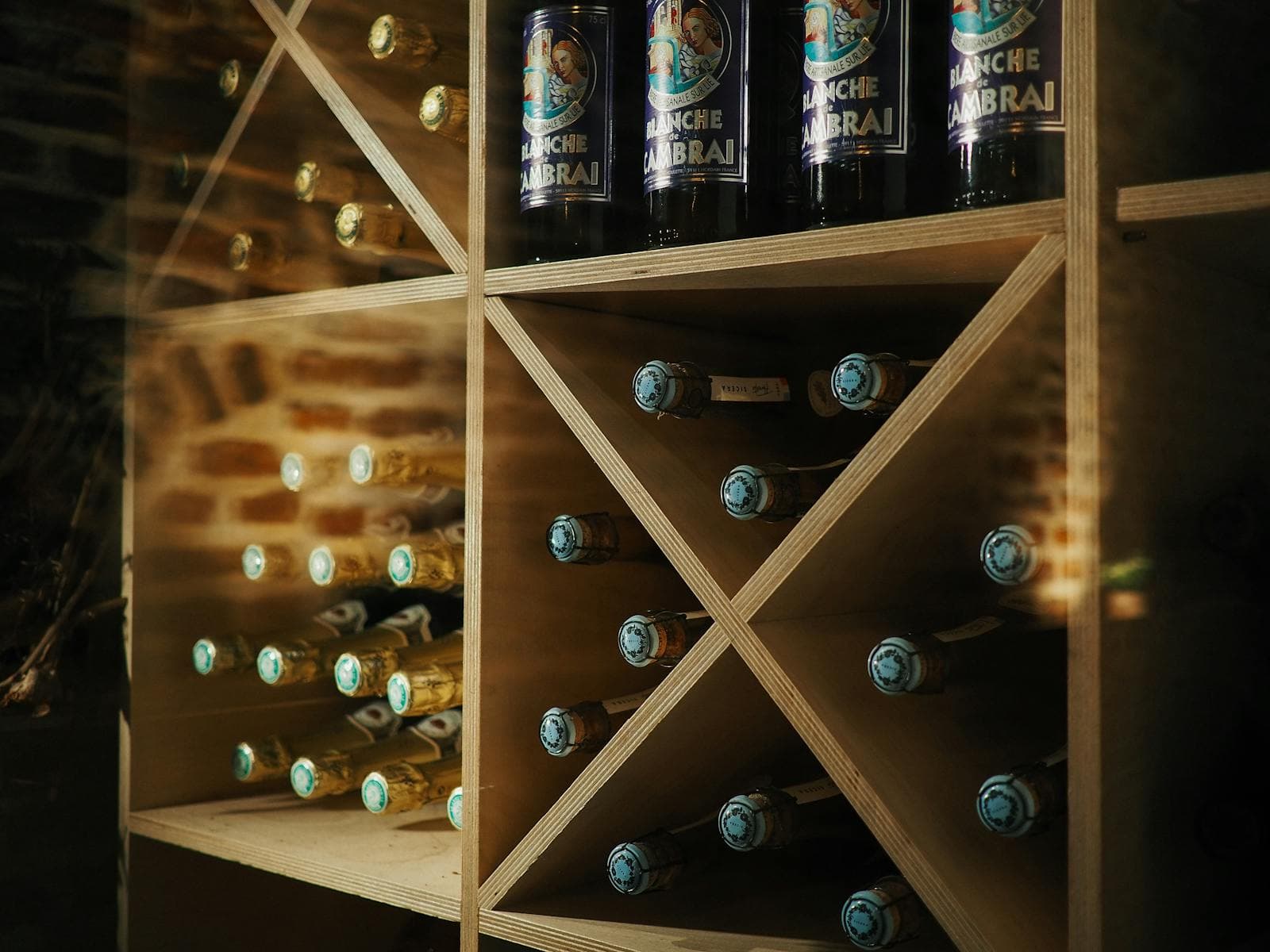
Custom Wine Cellars
One-of-a-kind cellars built around your home, your collection and your taste.
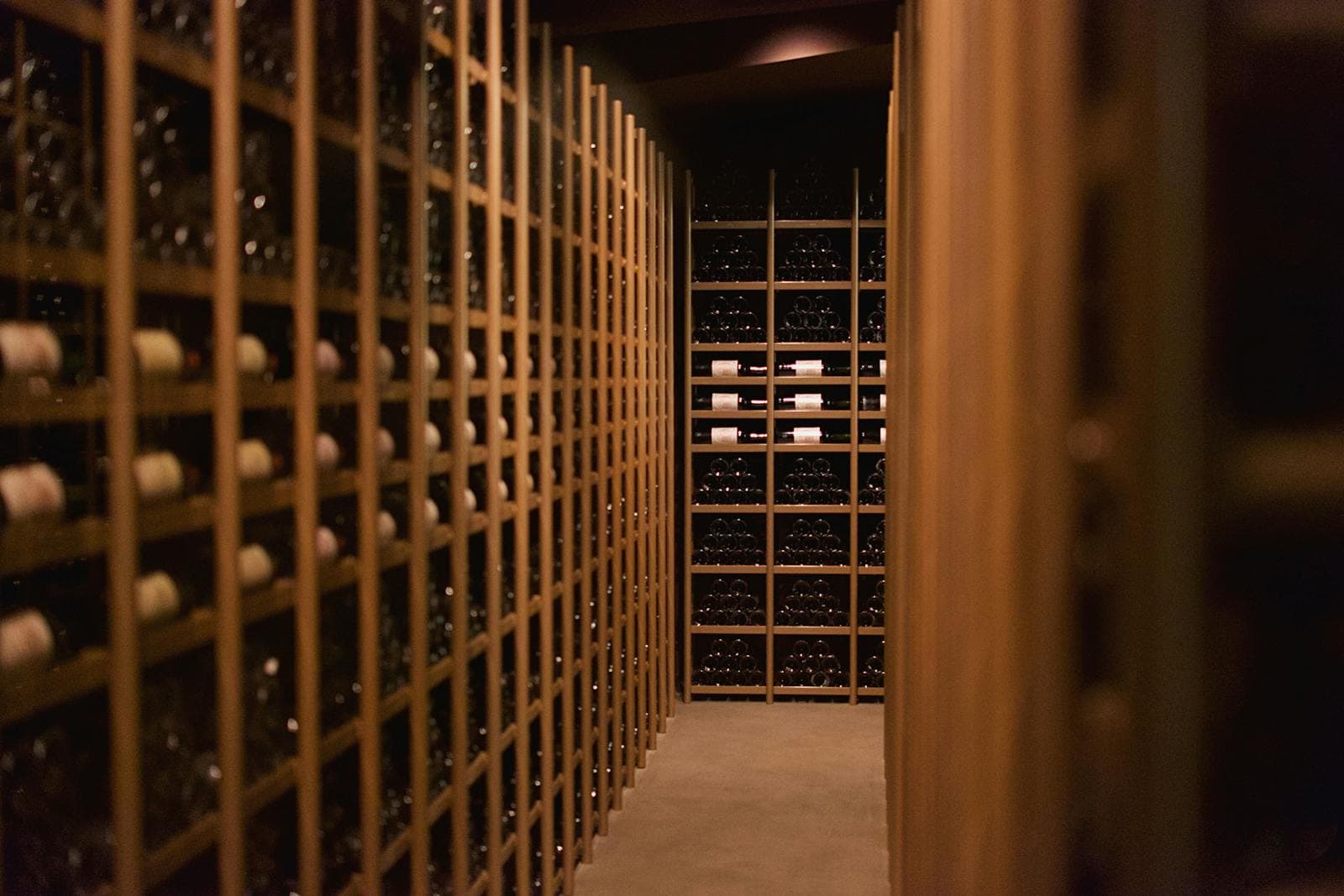
Wine Cellar Installation
Professional installation from foundation to finish — structural, electrical and cooling.
Wine Cellar Flooring
Stone, reclaimed wood-barrel, and engineered tile flooring for cellars.
Wine Cellar Lighting Questions
Will LED lighting really keep my wine cellar cooler?+
Yes, dramatically. A typical halogen wine cellar lighting load is 500-1,000 watts. The same illumination from LED is 60-150 watts. Every watt of lighting becomes heat the cooling unit has to remove. Switching from halogen to LED can reduce cellar heat load by 1,500-3,000 BTU/hr — enough to drop a cooling unit one full size in some cases. The cellar holds climate more easily, the cooling cycles less often, and the unit lasts years longer.
What color temperature is best for a wine cellar?+
2700K to 3000K warm white is our standard. It flatters wood racking, brings out label colors, and creates the warm, intimate feel most clients associate with a great cellar. Cooler temperatures (3500K-4000K) feel commercial and clinical — fine for a working storage room, wrong for a display cellar. Avoid anything above 4000K for a residential wine cellar; the room will feel like a refrigerator.
Can wine cellar lighting really damage wine?+
UV exposure can degrade wine over years, especially light-bodied whites and sparkling wines stored in clear or pale glass. Standard incandescent emits negligible UV, halogen emits some, fluorescent emits significant amounts, and LED emits essentially none. Properly specified LED lighting is effectively neutral to wine — it adds heat we can engineer around but no meaningful UV. We have never had a client complain about lighting-related wine damage in an LED-lit cellar.
What does wine cellar lighting typically cost?+
Pricing varies with the size of the room, the materials you pick and the condition of the existing space. A straightforward project usually lands between $8,000 and $35,000; larger custom builds run higher. We give you an itemized quote — labor, materials, cooling, electrical, permits — before we ask for a deposit, so you can compare apples to apples.
How long does wine cellar lighting take from start to finish?+
Two to four weeks of work on-site is normal for a residential project, plus design and permitting up front. Larger custom builds run six to ten weeks. We hand you a real schedule on day one — and we update it every Friday.
Are you licensed, insured, and warrantied?+
Yes — fully licensed and insured in all 50 states, with HVAC-certified technicians on every cooling install and a 10-year structural warranty on every wine cellar we hand over. Our cooling units carry the manufacturer warranty plus our own service-plan coverage.
Will I work with the same team from start to finish?+
Yes. One project manager and one in-house crew handles the entire job. We never subcontract framing, cooling, racking or finish work to a third party — that's the whole reason the company exists.